

Spotted a plant on a walk or in a park and have no idea what it is? A phone photo can usually narrow it down in seconds, and you do not have to pay for it: three well-rated apps do the job for free.
This guide covers PlantNet, Flora Incognita and Seek, in that order: what each one does best, how to take a photo they can read and what none of them can promise. All three come from research projects, not from a subscription business.
One note before you start: a photo match is a strong guess, not a confirmation. None of these apps should decide whether a plant is safe to eat, to use as a remedy or to keep near children and pets.
6 min read
📋 What you’ll find here
- Why a plant photo gets the wrong name
- PlantNet: tell it which part you photographed
- Flora Incognita: made for wild plants
- Seek: no account, and it knows animals too
- What each app charges, and the paid one we left out
- What none of them can promise
Key Takeaways
- PlantNet, Flora Incognita and Seek list no in-app purchases (store listings checked on October 9, 2026).
- A sharp photo of one plant part against a plain background does most of the work.
- PictureThis runs on a subscription, so it is not on this list.
- A match is a probability, never a reason to eat a plant or use it as a remedy.
Why a plant photo gets the wrong name
Most misses start with the photo, not the app. A blurry leaf against a busy background, a whole bush shot from a few metres away or a single leaf that looks like a hundred others leaves the app too little to work with.
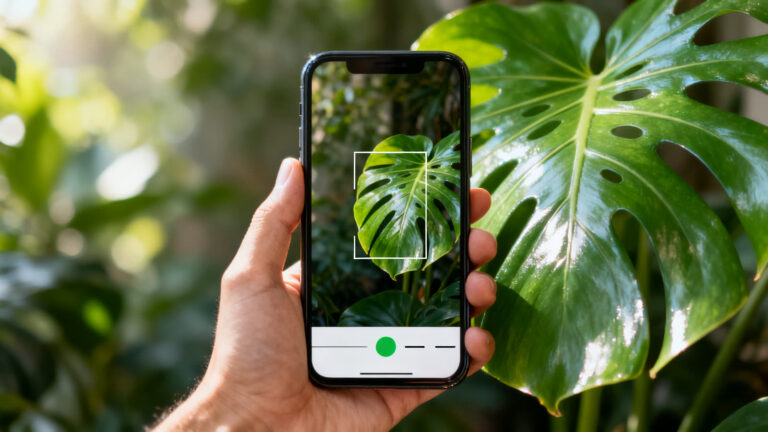
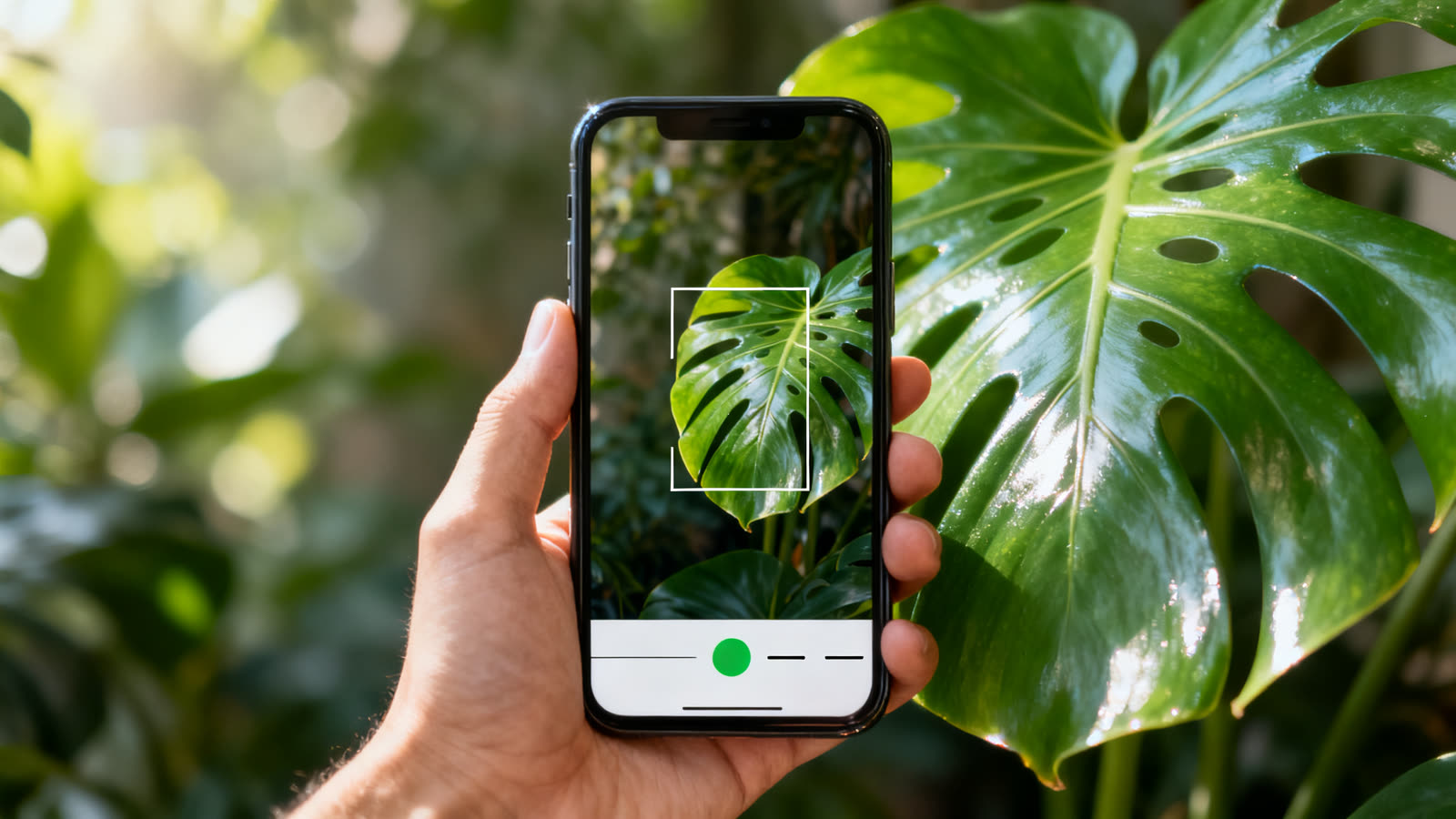
The fix takes seconds. Fill the frame with one part of the plant, such as a single leaf, flower or fruit. Put something plain behind it, like your hand, a sheet of paper or the sky, and use daylight instead of the flash, which flattens colour and texture.
Start with the flower if there is one, since it is usually the most telling part. If the first result is unsure, add a second photo of a leaf, the fruit or the bark. All three apps below work better with that kind of photo.
Keep reading 👇
Coin identifier app: what an old coin’s estimate means ›
Find free Wi-Fi hotspots when you travel ›
Learn crochet on your phone, step by step ›
PlantNet: tell it which part you photographed
PlantNet asks what the photo shows: leaf, flower, fruit or bark. Its listing also suggests close-ups of details such as thorns, buds or hairs on the stem, which help separate look-alike species.
You can pick a region or a project before identifying, so your photo is compared only with plants that make sense for that place. The answer comes as a list of candidates, each with a score. Its stated focus is plants living in nature; a shop-bought potted plant may be harder for it.
According to its App Store listing, checked on October 12, 2026, it has no in-app purchases; the listing does not mention ads or accounts. It is a citizen science project led by French research institutes, so the photos you send are collected and studied by scientists. It does not give watering or care schedules.

Flora Incognita: made for wild plants
Flora Incognita was built by scientists at the Technical University of Ilmenau and the Max Planck Institute for Biogeochemistry in Jena, Germany, with support from German federal ministries and foundations. Its listing says it recognises wild plants even before they bloom.
Each result opens a fact sheet on the species, and every find goes into an observation list with a map of where you saw it. On a walk you take often, that list becomes a record of what grows along the way through the year.
Its focus is also its limit: it started with the plants of Central Europe, and the listing mentions plans to add more species from other regions. It is free, with no premium version, no subscription and no ads, according to the App Store on October 9, 2026.

Seek: no account, and it knows animals too
Seek, from the nonprofit iNaturalist, works with the camera open: you point it at a plant and it tries to recognise it while you aim. It also identifies animals and fungi, and it awards badges and challenges for the species you observe.
It does not require registration and, by default, does not collect user data, according to its listing. Signing in is optional and requires being over 13 or having a parent’s permission. That makes it the easy pick for a walk with children.
When it is unsure, Seek tends to stop at a broader group, such as the plant’s family, rather than guess the exact species. Move closer, frame a flower or ask PlantNet for a second opinion. The US App Store, checked on October 9, 2026, lists no in-app purchases.

What each app charges, and the paid one we left out
The most-rated plant identifier we checked is PictureThis, with more than 1.1 million ratings on the US App Store. Downloading it is free; using it fully is not. Its listing, read on October 9, 2026, describes a subscription charged to your store account that renews automatically unless you turn it off.
Recent reviews on the Italian App Store, from April to September 2026, complain that the app works only with a subscription. That is why it is not on this list. If you have already subscribed, cancel in your store account’s subscriptions; deleting the app does not cancel.
| App | What it charges (listings, Oct 9, 2026) | Ads |
|---|---|---|
| PlantNet | Nothing: no in-app purchases | Not mentioned in the listing |
| Flora Incognita | Nothing: no premium, no subscription | None, per the listing |
| Seek | No in-app purchases listed on the App Store | Not mentioned in the listing |
| PictureThis | Subscription that renews automatically | Not checked |
What none of them can promise
A high score means your photo looks like the photos of that species in the app’s database. It does not mean the plant has been confirmed. Before accepting a name, open the pictures of the suggested species and compare the leaves, flowers and stem with the plant in front of you.
No plant app should decide whether something is edible, can be used as a remedy or is dangerous to a child or a pet. If someone has swallowed part of an unknown plant, call a doctor, a vet or your local poison control centre instead of trusting a photo match.
Which one to open first
All three fit on the same phone, and running two of them on the same plant is the simplest way to check a result. If you want just one to start with:
| If you want to | Start with | Why |
|---|---|---|
| Name a plant in a park, wood or backyard | PlantNet | You choose the part and the region |
| Identify a wild plant in Europe | Flora Incognita | Built for that flora |
| Explore with children | Seek | No account, animals and badges |
| Name a shop-bought potted plant | Two of them, to compare | All three focus on plants in nature |
The short version
To put a name to a plant without paying, PlantNet, Flora Incognita and Seek are enough. Care schedules and watering reminders are a different job, and none of these three does it.
This article is informative and independent. We have no connection with PlantNet, Flora Incognita, Seek, PictureThis or their developers. The information comes from the official listings and public reviews, checked on October 9, 2026, and may change. We are not responsible for any identification, any store charge or any use of a plant based on them.
FAQ
Are these three apps really free?
According to the store listings checked on October 9, 2026, yes: none lists in-app purchases. Flora Incognita also states that it has no ads.
Which part of a plant should I photograph?
The flower, if there is one, filling the frame against a plain background. If the result is unsure, add a photo of a leaf, the fruit or the bark.
Can these apps tell me if a plant is poisonous?
Do not rely on them for that. A photo match is a probability. If a child or a pet has eaten part of a plant, contact a doctor, a vet or your local poison control centre.
Why is PictureThis not on the list?
Because it works on a subscription that renews automatically, according to its App Store listing. Downloading is free, but this list only includes apps with no in-app purchases.
Can I use two apps on the same plant?
Yes, and it is the simplest way to check a result. When two apps return the same name, you can trust it more.
